Linking Secure Transaction Options to Customized Bonus Pathways in Portable Table Game Environments
Written by Katja Beck · Sep 22, 2026

Linking Secure Transaction Options to Customized Bonus Pathways in Portable Table Game Environments
Portable table game environments have expanded rapidly as developers integrate secure transaction systems with player-specific bonus structures; these connections allow mobile platforms to process deposits through encrypted channels while routing rewards along tailored progressions that reflect individual wagering patterns. Data from multiple gaming operators indicates that such linkages appeared in production environments as early as 2024 and continued to scale through September 2026 when several major providers updated their mobile suites to support multi-factor authentication tied directly to bonus tier calculations.
Core Transaction Security Measures
Secure transaction options in these environments rely on tokenization, end-to-end encryption, and device-level biometric verification; operators route payments through processors that generate unique session tokens for each deposit, and these tokens feed into backend systems that determine which bonus pathways become available. Researchers at industry technology firms have documented how biometric checks reduce unauthorized access attempts by measurable percentages while preserving the speed required for live table sessions on smartphones and tablets. When a player selects a preferred payment method, the platform records metadata such as currency type, transaction velocity, and account age, then maps that data against predefined reward matrices.
Customized Bonus Pathway Construction
Customized bonus pathways operate through algorithmic segmentation that assigns players to reward tracks based on deposit behavior and historical play volume; for instance, a deposit completed via a digital wallet might unlock accelerated loyalty points in blackjack variants, whereas a bank transfer could trigger extended playtime credits in poker formats. Observers note that these pathways update dynamically after each verified transaction, pulling real-time risk scores and engagement metrics from centralized databases. Software providers have released documentation showing that the integration layer between payment gateways and bonus engines uses standardized APIs, allowing operators to adjust reward multipliers without altering core game logic.
Integration Mechanisms Across Platforms
Developers link transaction data to bonus systems by embedding conditional logic inside the mobile application layer; after a deposit clears, the server evaluates the payment source against a rules engine that assigns the player to one of several progression ladders. Those ladders contain sequential milestones such as wager thresholds or time-based challenges that release incremental rewards. Studies conducted by European gaming technology consortia reveal that synchronized data flows between payment processors and bonus servers have lowered reconciliation errors by substantial margins in multi-jurisdiction deployments. And because portable environments transmit data over variable network conditions, operators incorporate retry protocols and checksum validations to maintain consistency between transaction records and active bonus states.
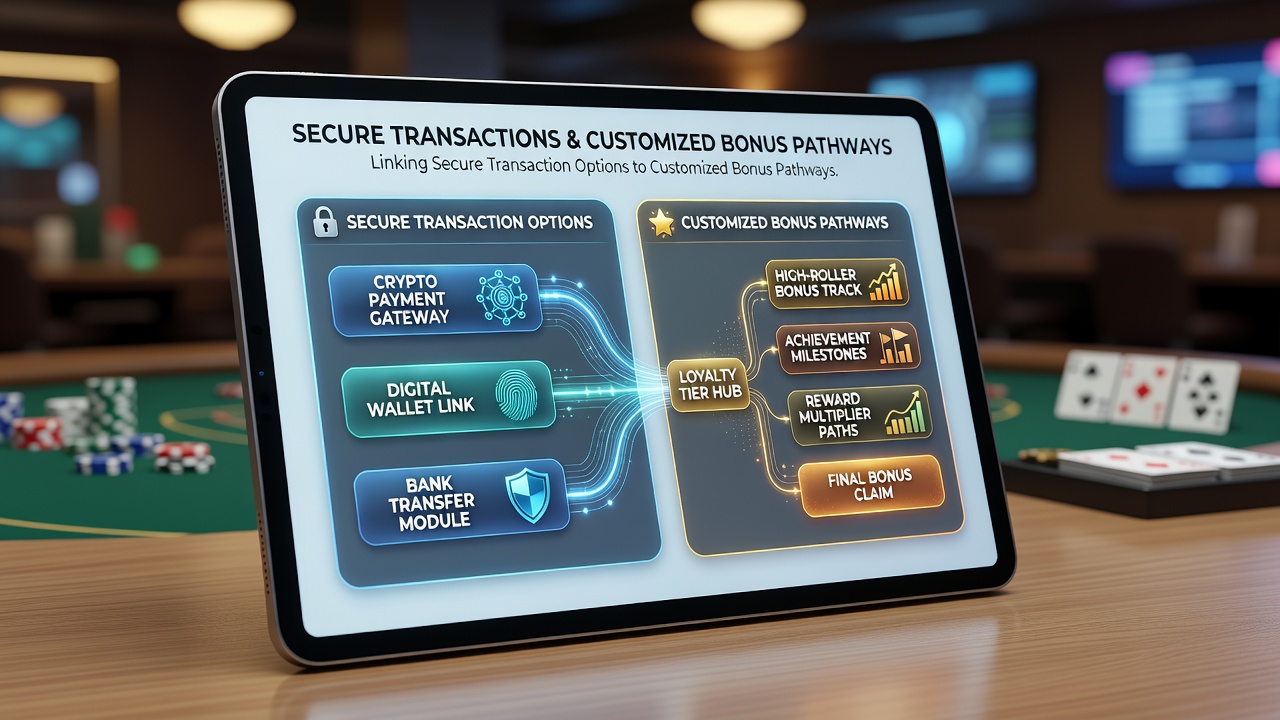
One documented case involved a Southeast Asian operator that aligned cryptocurrency deposit options with specialized bonus paths for baccarat players; the system automatically converted transaction values into platform credits and applied tiered multipliers drawn from the player's prior session data. Similar implementations have appeared in North American markets where state-regulated platforms connect debit card deposits to progressive jackpot qualifiers within mobile roulette environments. Regulatory filings submitted to oversight bodies in multiple regions show that these linkages require audit trails capable of reconstructing every transaction-to-reward step for compliance verification.
Data Flow and Player Segmentation
Player segmentation draws on aggregated transaction histories and game-specific metrics to refine bonus eligibility; platforms collect anonymized datasets that track deposit frequency, average transaction size, and preferred table variants, then feed those inputs into machine-learning models that predict optimal reward sequences. According to reports issued by the Responsible Gambling Council of Canada, operators that maintain clear separation between payment processing and reward calculation achieve higher compliance scores during periodic reviews. The models adjust pathway difficulty in response to observed play patterns, ensuring that bonus triggers remain proportionate to verified activity levels across different device types.
Regulatory and Technical Considerations
Regulatory frameworks in several jurisdictions now require explicit documentation of how transaction security features influence bonus distribution; auditors examine whether certain payment methods receive preferential reward treatment and verify that all pathways adhere to fairness standards. Technical specifications released by software vendors in 2025 and 2026 emphasize modular architecture, allowing operators to swap payment providers without disrupting existing bonus logic. Data indicates that adoption of these modular systems accelerated after September 2026 when updated interoperability standards took effect across major app marketplaces.
Conclusion
The linkage between secure transaction options and customized bonus pathways in portable table game environments continues to evolve through standardized APIs, dynamic segmentation models, and regulatory oversight that spans multiple regions. Operators that maintain transparent data flows between payment processors and reward engines support both operational efficiency and compliance requirements while delivering player experiences calibrated to individual deposit and play histories.